
Welcome to Puerto Rican Coffee
For generations, coffee has been more than a morning drink in Puerto Rico. It is part of family conversations, neighborhood gatherings, mountain agriculture, and daily routines.
From the aroma of freshly brewed coffee in a kitchen to the cultivated hillsides of the island's interior, Puerto Rican coffee connects agriculture, history, and tradition.
Welcome to Raxan.org, a starting point for exploring coffee from Puerto Rico.
Whether you are discovering the island's coffee for the first time or reconnecting with a familiar flavor, this introduction will help you understand what makes Puerto Rican coffee worth exploring.
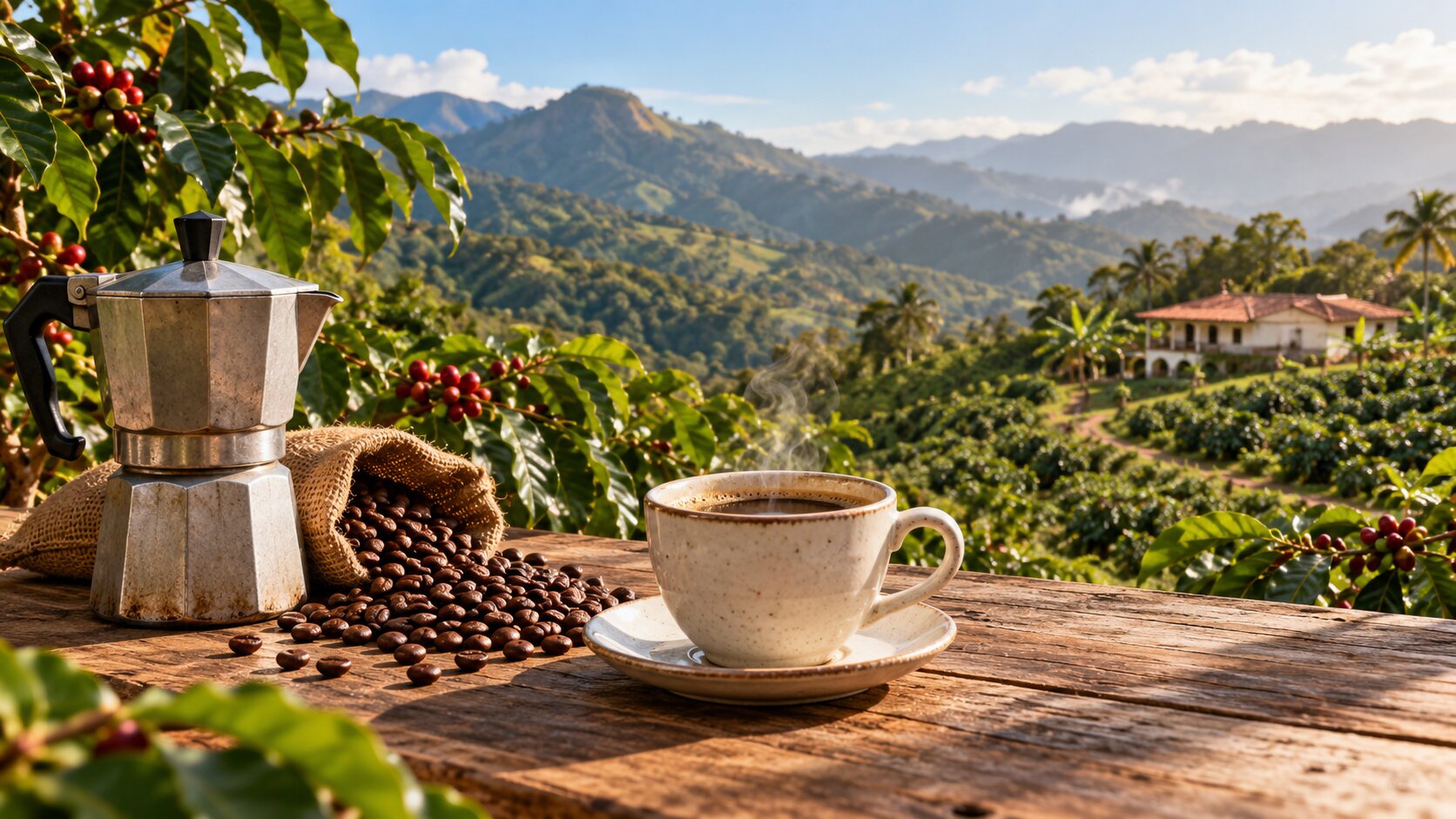
Coffee at a Glance
Puerto Rico has a long history of cultivating coffee, particularly in its mountainous interior. Although the island's coffee industry has changed significantly over time, coffee remains an important part of its agricultural and cultural identity.
Here are a few useful facts for newcomers:
- Coffee species: Arabica has an established role in Puerto Rican coffee production.
- Growing areas: Mountain communities such as Yauco, Adjuntas, Lares, and Maricao have important coffee-growing histories.
- Flavor: Characteristics vary by farm, variety, roast, and processing method.
- Everyday enjoyment: Espresso, café con leche, and other preparations are familiar choices.
- Best starting point: Compare coffees from different producers rather than assuming every Puerto Rican coffee tastes alike.
The most rewarding way to understand island coffee is to explore both the people who produce it and the different ways it can be prepared.
The History Behind the Cup
Coffee cultivation became established in Puerto Rico during the Spanish colonial period. Over time, the crop expanded into the mountainous interior, where suitable growing conditions supported agricultural development.
During the nineteenth century, coffee became one of Puerto Rico's important export crops. Coffee-growing communities developed around farms, processing facilities, commercial networks, and the seasonal labor of cultivation and harvesting.
Historical coffee production helped shape the identity of municipalities such as Yauco, Lares, and Adjuntas.
The industry also experienced major difficulties, including hurricanes, economic changes, labor shortages, and shifts in agricultural production.
Those challenges remain relevant to understanding coffee today.
Coffee is an agricultural product that requires substantial effort before it reaches a cup. Cultivation, harvesting, processing, roasting, packaging, and distribution all contribute to the finished product.
Recognizing this history adds depth to something that might otherwise seem like an ordinary daily beverage.
Where Puerto Rican Coffee Grows
Puerto Rico's interior mountains contain some of the island's best-known coffee-growing communities.
Yauco
Yauco has a historical reputation associated with coffee cultivation and commerce. The municipality is closely connected with discussions of Puerto Rico's traditional coffee heritage.
Adjuntas
Adjuntas is another significant mountain municipality with a longstanding relationship to coffee agriculture.
Its terrain and agricultural history make it an important location for anyone interested in understanding how coffee farming fits into Puerto Rico's interior landscape.
Lares
Lares has deep agricultural roots, including coffee cultivation. Its surrounding mountain communities contribute to the broader story of island-grown coffee.
Maricao
Maricao is also associated with coffee farming and the agricultural traditions of Puerto Rico's western mountains.
These municipalities are useful starting points for exploring coffee history, but the name of a municipality alone does not establish a coffee's quality.
Individual farms, cultivation practices, processing, and roasting decisions all matter.
Understanding Coffee Flavor
What should Puerto Rican coffee taste like?
There is no single flavor profile that describes every coffee grown on the island.
Some coffees may offer chocolate-like or nutty characteristics. Others can display noticeable sweetness, fruit notes, or a brighter acidity.
The differences depend on several factors.
Coffee Variety
Coffee plants have different genetic characteristics. These differences can influence the flavors available in the finished cup.
Growing Conditions
Elevation, temperature, rainfall, shade, soil, and farm management affect coffee development.
Two farms in the same municipality can produce noticeably different coffees.
Processing Methods
After harvesting, producers must separate and prepare the coffee seeds.
Processing techniques, including washed and natural methods, can influence the final flavor.
Roasting
A lighter roast may preserve more of a coffee's distinctive acidity and delicate characteristics.
A darker roast generally emphasizes deeper roasted flavors, sometimes reducing the visibility of subtle origin characteristics.
Neither approach is automatically better.
The right choice depends on personal preference and the coffee being roasted.
How Puerto Ricans Enjoy Their Coffee
Coffee is an established part of everyday life in Puerto Rico.
A short coffee break can become an opportunity to talk with relatives, welcome a visitor, or catch up with a neighbor.
Common preparations include:
Café negro: Black coffee, served without milk.
Café con leche: Coffee combined with milk, with proportions varying by preference.
Espresso: A concentrated preparation made by forcing hot water through finely ground coffee.
Cortadito: A small serving of espresso softened with milk, with local and individual variations.
There is no requirement to enjoy coffee one particular way.
Some people prefer a strong cup without sugar. Others enjoy milk, sweetener, or a gentler coffee-to-milk ratio.
Coffee culture is not simply about preparing the technically perfect cup. It is also about individual taste, hospitality, and the routines that give everyday experiences meaning.
Choosing and Brewing Coffee at Home
Discovering Puerto Rican coffee does not require expensive equipment.
A simple approach is to begin with a freshly roasted coffee from a producer whose information is clearly provided.
Choose Coffee With Useful Details
When comparing packages, look for:
- The producer or roaster's identity
- Whether the coffee was grown in Puerto Rico
- Roast level and roast date, when available
- Whole-bean or ground format
- Recommended preparation method
- Processing method or farm origin, when disclosed
Remember that coffee roasted or packaged in Puerto Rico is not necessarily grown there. Read origin statements carefully if locally grown beans are important to your purchase.
Select a Brewing Method
| Method | Characteristics | Suitable For |
|---|---|---|
| Drip coffee maker | Convenient and consistent | Everyday brewing |
| French press | Full-bodied texture | Those who prefer immersion brewing |
| Pour-over | Greater manual control | Exploring subtle flavors |
| Moka pot | Concentrated, strong coffee | Milk-based preparations |
| Espresso machine | Concentrated extraction | Espresso and café con leche |
Try a Simple Brewing Experiment
For a basic pour-over or drip preparation, begin with approximately 15 grams of ground coffee for 250 grams of water.
Use this as a starting point, not an absolute rule.
Taste the finished coffee and adjust gradually.
If it seems too weak, experiment with the coffee-to-water ratio or grind size.
If it tastes unpleasantly bitter, examine extraction time, grind size, water temperature, and roast level.
Change one variable at a time.
Keeping a small record of your adjustments can help you discover which preparation produces your favorite cup.
Exploring Coffee Beyond the Cup
Coffee becomes more interesting when you learn what happens before brewing.
A coffee-producing farm must manage plant growth, environmental conditions, harvesting, processing, and the practical demands of agricultural work.
Roasters then make choices that influence how the finished coffee expresses its characteristics.
Retailers and cafés introduce these products to customers, sometimes helping them understand origin, roast profiles, and preparation techniques.
For anyone interested in learning more, consider exploring three perspectives.
The Producer
Learn where coffee comes from and how it was grown.
Farm-level information helps connect the finished product to the agricultural decisions behind it.
The Roaster
Explore how different roast levels influence the same or similar coffees.
A roast profile can change how sweetness, acidity, and body appear in the cup.
The Coffee Drinker
Experiment with preparation and personal preference.
A coffee that seems unremarkable using one method may become more enjoyable with another.
No single tasting description can replace trying a coffee yourself.
Your Coffee Journey Begins Here
Puerto Rican coffee brings together agriculture, history, regional identity, and everyday enjoyment.
Learning about it means appreciating more than the finished beverage. It means understanding the growers, processing decisions, roasting techniques, and traditions that contribute to every cup.
Raxan.org welcomes readers who are curious about coffee from Puerto Rico, whether their interests begin with history, brewing, flavor, or the simple pleasure of a morning cup.
Start by exploring a locally grown coffee, learning about its origin, and preparing it in a way you enjoy.
Sometimes, discovering something remarkable begins with something familiar.
Frequently Asked Questions
Is all coffee sold in Puerto Rico grown on the island?
No. Coffee may be imported, blended, locally roasted, or locally grown. Check the package and producer information if agricultural origin matters to you.
Is Puerto Rican coffee always dark roasted?
No. Roast levels vary by brand and producer. Different roasting approaches can emphasize different flavor characteristics.
Do I need an espresso machine to enjoy Puerto Rican coffee?
No. Drip machines, French presses, pour-over equipment, and moka pots can all be used to prepare coffee.
Where should beginners start?
Choose a coffee with a clearly identified origin and roast information. Try one brewing method and gradually adjust the preparation according to taste.
By: Raxan.org
Updated: October 17, 2026
Disclosure: Educational editorial content. No paid product endorsements are included.

0 Comments